Clean Up the Coastline of Iceland
Veraldarvinir’s Clean Up the Coastline (CUC) project aims to clean the beaches of Iceland within 5 years by collecting waste in collaboration with international volunteers, school children, students, youth and environmental organizations and companies.
Veraldarvinir gets support for its Clean Up the Coastline project by the Ministry of Environment, the Farmers Association, the Association of Local Authorities in Iceland, the University of Iceland and the international organization Clean Up the World.
Clean Up the World
The Clean Up the Coastline program is linked to the Clean Up the World Project, a global, community based environmental initiative that motivates and empowers individuals and organizations to take part in clean up activities all around the world. The project has been running for 15 years and is partnered with the United Nations Environment Program (UNEP), which annually mobilizes 35 million volunteers from 120 countries. The Clean Up the World campaign brings business, schools, community groups and governments together to take part in a range of activities which create a positive impact on local communities.
Why do we do this project?
The marine area around Iceland is regarded as one of the cleanest of the world. Nevertheless, marine litter such as persistent organic pollutants, heavy metals or hydrocarbons is constantly contaminating Iceland‘s shore. A large-scale surface of the Icelandic coastline is concerned by this pollution and some beaches are even fully covered by trash, mainly caused by poorly managed landfills close by.
The main source of litter in the ocean as well as on Icelandic beaches are carelessly conducted garbage dumps. Various types of waste are carried in that way directly into the sea: either by wind from urban areas or by rivers from sewage systems.
Another aspect of the coast‘s pollution concerns the fishing industry. Lot‘s of harmful waste produced by fishermen can be found in serious quantities on the shores, such as derelict fishing nets, ropes, wires ...
All these different kind of litter represent an obvious danger for the marine environment, especially, for sea birds and marine mammals which could suffer entanglement, starvation, intoxication, infection and finally die because of it.
Our Actions
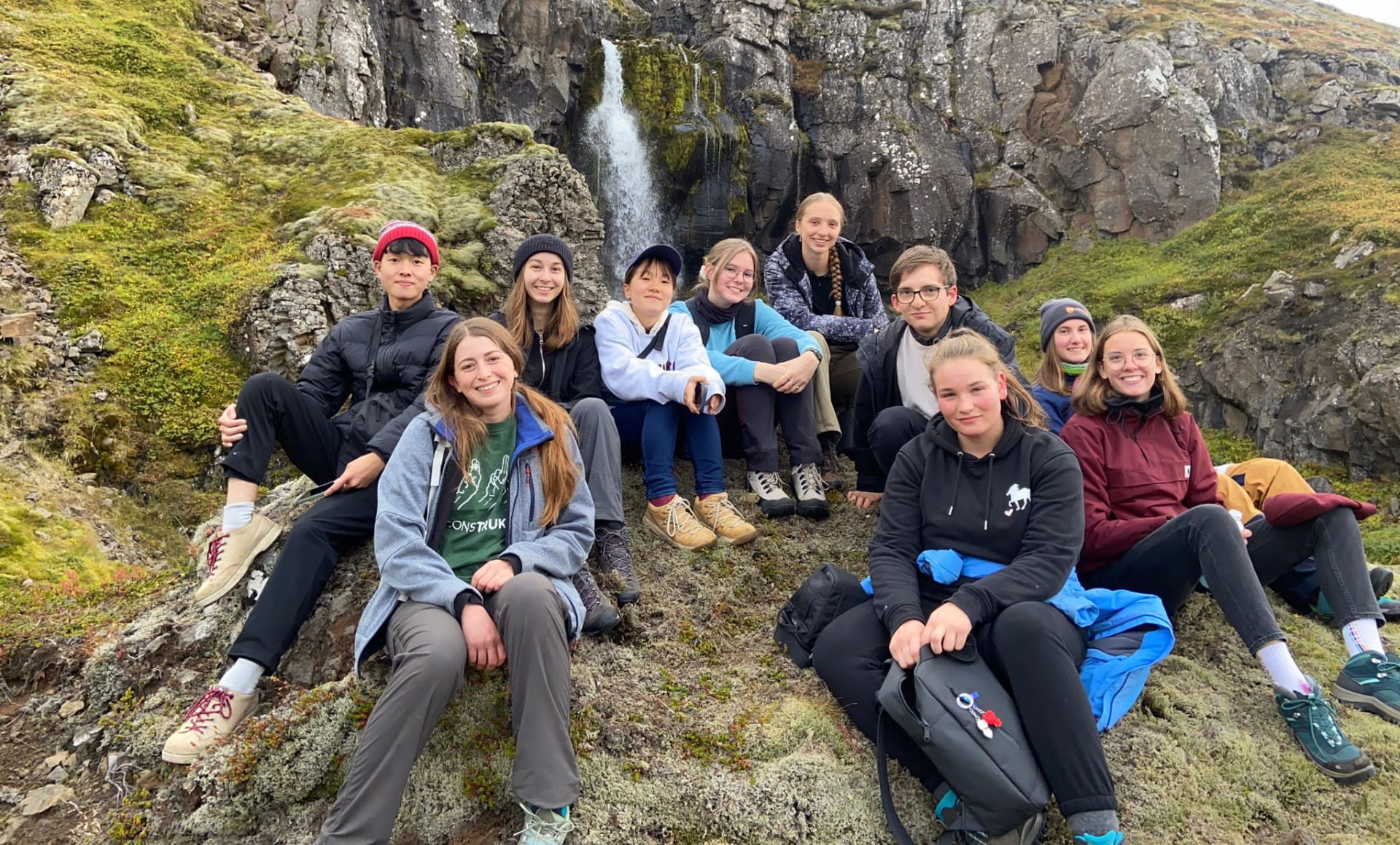
The majority of the cleaning operations take place in over 50 two-week workcamps around the coast of Iceland. Photos from CUC activities during the workcamps as well as with school children in Reykjavík can be found here.
Besides cleaning the coastline, we also want to teach people about environmental issues and show that taking care of the environment can be loads of fun. The cleaning events will not be boring work but fun filled, action packed activities that go along with games, music, art and education. Furthermore, we want to launch research projects investigating the garbage we collect at the sea shore. We want to know more about the characteristics of the garbage, its harmfulness and its origins.
For more detailed information please have a look at our CUC project blog: http://cleanupthecoastline.wordpress.com
Map of Coastline That Has Been Cleaned
Latest Clean Up the Coastline of Iceland News:
15/01/2009
2009: Let‘s keep on Cleaning Up the Coastline!
This year again, more than fifty workcamps from May to September with around seven hundred participants will continue to pick-up lots of trash on the coastline all around Iceland.
As during the last years, the Veraldarvinir’s workcampers will once again work this summer on the shore, picking up small an big trash, mainly plastic and nets. Sometimes, disappointed to see how a cleaned place could be dirty again after just one week, they, at least, understand how the marine litter is spreading the ocean and how, after picking up so much plastic, this material is resistant and could be harmful for the marine environment.